
Integrating Automatic Case Unpackers and Sealers for High-Speed End-of-Line Packaging
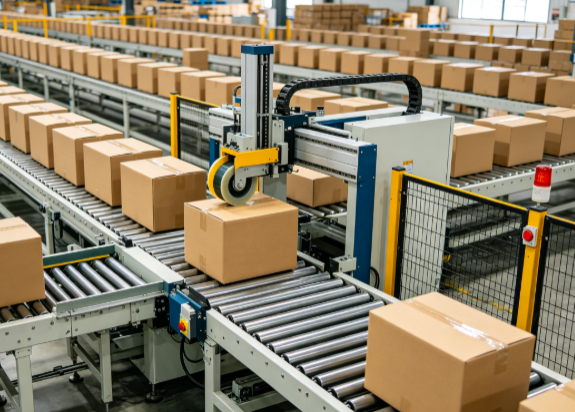
Article content
If you've ever stood at the end of a production line watching operators manually fold cartons and tape boxes, you already know the problem. It's slow. It's inconsistent. And it's a bottleneck that limits everything upstream.
I've spent enough time on packaging floors to know that end-of-line operations are often the last place people look for automation. Everyone focuses on the filling line, the assembly line, the processing equipment. But the moment product comes off the line, suddenly it's manual labor, tape guns, and prayer.
Here's the thing. The gap between a fast production line and a slow packaging line is where profitability goes to die. If your case erecting and sealing can't keep up with your filling speed, you're either running your line slower than it can go or building up work-in-progress that ties up floor space and labor.
Integrating automatic case unpackers and case sealers into a continuous end-of-line packaging system is one of the highest-ROI automation investments you can make. Let me walk you through what these machines do, how they work together, and what you need to know to get it right.
What Are Automatic Case Unpackers and Case Sealers?
Let's start with the basics.
Automatic case unpackers (sometimes called case erectors or case formers) take flat, knocked-down cartons and turn them into open, bottom-sealed cases ready for loading. The machine picks a flat carton from a magazine, erects it into a rectangular case, folds the bottom flaps, and applies tape or adhesive to secure them.
Equipment scope typically covers flat-carton picking, case forming, bottom-flap folding, and tape sealing, with carton dimensions, tape format, and upstream or downstream interfaces configured for the specific packaging project.
Automatic case sealers pick up where unpackers leave off—or more accurately, where the packing station leaves off. After product has been loaded into the case, the sealer folds the top flaps and applies tape to close the filled case.
The sealer handles carton flap folding, top and bottom tape sealing, and packaging-line integration, with drive arrangement, carton range, tape format, and conveyor interfaces selected for the approved packaging process.
Between them, these two machines transform a pile of flat cardboard into a sealed, shippable case—with no manual labor required.
The Integration Case: Why Unpackers and Sealers Belong Together
Here's something I see too often. A plant installs a case unpacker, then manually transfers cases to a packing station, then manually feeds cases to a sealer. Or worse, they only install one of the two and keep the other operation manual.
That's not integration. That's islands of automation with manual labor in between.
The real value comes from continuous, synchronized flow. Unpacker → conveyor → packing station → conveyor → sealer. Product flows in one end, sealed cases come out the other. No buffers. No manual handling. No bottlenecks.
Throughput Matching
The unpacker and sealer need to run at the same speed—or more precisely, at the speed of the packing operation between them. If your unpacker can do 15 cases per minute but your sealer can only do 10, you've got a problem. If both can do 15 but your packing station can only do 12, you've got a different problem.
The integration starts with understanding your target throughput and making sure all three stations—unpacking, packing, sealing—are matched.
Floor Space Optimization
A properly integrated unpacker-sealer system takes up less floor space than separate machines with manual handling zones in between. The conveyor system that connects them can be straight, L-shaped, or U-shaped depending on your layout. But the key is eliminating the "staging areas" where manual handlers used to stand.
Labor Reduction
This is the big one. A fully integrated unpacker-sealer system can replace multiple manual operators. One person can often monitor the entire system, intervening only for changeovers or clearing jams. In high-volume operations, that's two to four operators per shift eliminated—and in multi-shift operations, that adds up fast.
Consistency and Quality
Manual case sealing is inconsistent. One operator tapes tighter than another. One folds flaps more carefully. One misses a flap entirely on a busy day. Automatic sealers apply tape with consistent tension, consistent placement, and consistent pressure—every single time.
Key Technical Specifications and Capabilities
Let me break down what you need to know about these machines.
Case Unpacker Capabilities
A typical automatic case unpacker handles:
Flat-carton picking: Pulling individual knocked-down cartons from a magazine
Case forming: Erecting the carton into a rectangular case
Bottom-flap folding: Folding the bottom flaps in the correct sequence
Tape sealing: Applying tape to secure the bottom flaps
The machine is configured around your specific carton dimensions, tape format, and upstream/downstream interfaces. That means the magazine size, forming mechanism, and sealing head all need to match your case size range.
Key specification points:
Case size range: Minimum and maximum dimensions the machine can handle
Throughput: Cases per minute (typically 10-25 for mid-range machines)
Magazine capacity: How many flat cartons the machine can hold
Tape format: Width and type of tape the sealing head accepts
Changeover time: How long it takes to switch between case sizes
Case Sealer Capabilities
A typical automatic case sealer handles:
Carton flap folding: Folding top flaps in the correct sequence
Top and bottom tape sealing: Applying tape to close the filled case
The sealer's drive arrangement, carton range, tape format, and conveyor interfaces are selected for the approved packaging process.
Key specification points:
Case size range: Must match the unpacker's range
Throughput: Must match or exceed the unpacker's throughput
Tape format: Should match the unpacker's tape specification
Conveyor type: Belt, roller, or combination
Height adjustment: Manual or automatic for different case heights
Conveyor Integration
The conveyor system between unpacker and sealer is where a lot of integration decisions live. You need:
Adequate accumulation space: If the packing station slows down, you need room for cases to queue without backing up into the unpacker
Smooth transfer: Cases need to move from the unpacker discharge to the conveyor to the packing station to the sealer infeed without tipping, jamming, or losing orientation
Sensing and control: Photoelectric sensors or proximity switches to track case position and control machine timing
Integration Considerations: Conveyors, Controls, and Changeovers
Let me walk through the practical considerations that determine whether your integrated system works smoothly or becomes a maintenance headache.
Control System Integration
The unpacker and sealer need to talk to each other—and to the packing station between them. At minimum, you need:
Start/stop interlocking: If the sealer jams, the unpacker needs to stop or slow down
Case presence sensing: The packing station needs to know when a case is waiting
Speed matching: The unpacker and sealer need to run at compatible speeds
Most modern machines use PLC controls with Ethernet/IP or similar protocols for communication. Make sure your machines support the same control platform, or budget for a gateway or interface device.
Changeover Efficiency
This is where integrated systems either shine or fail. If your production runs multiple case sizes, changeover time matters.
Manual changeover: Operators adjust magazine width, case forming guides, flap folders, and sealing heads using handwheels or quick-release levers. This takes 5-15 minutes depending on the machine and the operator's experience.
Automatic changeover: Some higher-end machines store case size recipes and adjust all settings automatically with the push of a button. This takes 30 seconds to 2 minutes.
The trade-off is cost. Automatic changeover adds significant machine cost. But if you're running multiple case sizes multiple times per shift, the productivity gain can justify the investment.
Tape Selection
Tape might seem like a minor detail, but it's not. The tape you choose affects sealing quality, machine reliability, and cost per case.
Pressure-sensitive tape is the most common for case sealing. It comes in various widths (typically 48mm or 72mm) and adhesive types. The key considerations are:
Adhesive tack: How quickly the tape sticks to the carton
Adhesive hold: How well it stays stuck over time and temperature variation
Tape strength: Tensile strength to resist breaking during handling and shipping
Dispensability: How well it feeds through the sealing head without jamming
Your unpacker and sealer should use the same tape specification to simplify inventory.
Industry Applications and Use Cases
Automatic case unpackers and sealers are used wherever products need to be packaged in corrugated cases at volume. Let me give you some specific examples.
Consumer Goods
Bottled beverages, canned foods, packaged snacks, household cleaners—all of these flow through integrated unpacker-sealer systems. The cases are typically uniform in size (or limited to a small range of sizes), and the throughput demands are high.
A typical consumer goods line might run 15-20 cases per minute, with the unpacker feeding cases to a manual or automatic packing station, then the sealer closing them up.
Electronics and Display
The photovoltaic and electronics sectors use integrated packaging lines for delicate components like silicon wafers and LCD panels. A silicon wafer automatic packaging line can coordinate wafer feeding, counting, alignment, boxing, case handling, and pallet handling.
For PV modules, the packaging line can coordinate module handling, corner protection, bagging, case sealing, strapping, stretch wrapping, and pallet handling.
E-Commerce Fulfillment
E-commerce fulfillment centers have exploded the demand for case sealing automation. But here's the twist—e-commerce case sizes vary wildly. One order might be a small case of books; the next might be a large case of bulky items.
This is where automatic changeover becomes critical. If your sealer takes 15 minutes to change between case sizes, you'll spend more time changing over than sealing.
Food and Beverage
Food and beverage packaging often involves washdown environments, so stainless steel construction and IP-rated electrical components are important. The case unpacker and sealer need to withstand regular cleaning without corrosion or electrical failure.
Real-World Application: High-Volume Consumer Goods Packaging
Let me share a project I was involved with that illustrates what integrated unpacker-sealer systems can deliver.
A consumer goods manufacturer was running a high-speed filling line for bottled products. The line filled 120 bottles per minute. The packaging operation—manual case erecting, manual packing, manual sealing—could only handle about 10 cases per minute. That's 80 bottles per case, so the math worked out: 10 cases per minute × 80 bottles = 800 bottles per minute. Wait, that doesn't work.
Let me correct that. The filling line filled 120 bottles per minute. At 24 bottles per case, that's 5 cases per minute. The manual packaging operation could handle about 4 cases per minute on a good day. The filling line was being throttled to match the packaging speed.
The plant installed an integrated unpacker-sealer system. The unpacker fed cases at 6 cases per minute. The packing station (semi-automatic, with operators loading bottles) could handle 5.5 cases per minute. The sealer could handle 6 cases per minute.
The result? The filling line ran at full speed for the first time. Throughput increased by 20% without any change to the filling equipment. Labor was reduced from four operators on packaging to two operators—one monitoring the system and one packing. The payback period was 14 months.
What's the lesson? The packaging line was the bottleneck, and nobody had realized it until they measured it. The integrated unpacker-sealer system didn't just automate—it unlocked capacity that was already paid for.
Frequently Asked Questions
What's the difference between a case unpacker and a case erector?
They're essentially the same machine. "Case unpacker" and "case erector" are used interchangeably in the industry. Both refer to equipment that takes flat, knocked-down cartons and forms them into open cases with sealed bottoms.
What throughput can I expect from an automatic case unpacker and sealer?
Mid-range machines typically handle 10-25 cases per minute. High-speed machines can exceed 30 cases per minute. The actual throughput depends on case size, case material, and the specific machine configuration.
Can the same machine handle different case sizes?
Yes, with changeover. Manual changeover takes 5-15 minutes. Automatic changeover (with recipe storage and motorized adjustments) takes 30 seconds to 2 minutes. The choice depends on how frequently you change case sizes.
Do I need both an unpacker and a sealer?
If you're forming cases from flat cartons and sealing filled cases, yes. Some all-in-one machines combine erecting and sealing functions, but they're typically slower and less flexible than separate machines connected by conveyor.
What tape should I use for case sealing?
Pressure-sensitive tape is the most common. Width is typically 48mm or 72mm. The adhesive type should match your carton material and storage conditions. Your machine manufacturer can recommend specific tape specifications.
How do I integrate the unpacker and sealer with my existing conveyor system?
Most machines have standard infeed and discharge heights. You'll need to design the conveyor system to match these heights and provide smooth transfer between stations. Photoelectric sensors or proximity switches at key points ensure cases are tracked through the system.
What's the typical payback period for an integrated unpacker-sealer system?
Payback periods typically range from 12 to 24 months, depending on labor savings, throughput gains, and the specific system cost. In high-labor-cost regions or multi-shift operations, payback can be even faster.
Final Thoughts
Look, I've been around enough packaging operations to know that end-of-line automation often gets overlooked. People focus on the filling line, the processing equipment, the primary packaging. But the case erecting and sealing—the last step before the product leaves the building—is where a lot of cost and capacity hide.
Automatic case unpackers and sealers are mature, reliable technologies. The integration between them is straightforward—conveyors, controls, and common sense. The ROI is well-documented: labor reduction, throughput increase, consistency improvement, and quality enhancement.
But here's the thing. You can't just buy two machines and expect them to work together. You need to think about throughput matching. Case size range. Changeover frequency. Conveyor design. Control integration. Tape selection. These are the details that separate a system that runs smoothly from one that's a constant source of jams and downtime.
The good news is that the technology is proven. The machines work. The integration is well-understood. And the payback is real.
The manufacturer I referenced earlier—XYM Automation—offers both automatic case unpackers and case sealers as part of their packaging automation portfolio. Their approach is project-based: they review the workpiece, process sequence, available layout, and required interfaces before finalizing the equipment scope. That's the right way to do it—not selling a machine off the shelf, but engineering a solution around the specific application.
If you're running a packaging line with manual case erecting and sealing, take a hard look at your numbers. Measure your actual throughput. Count your labor. Track your quality rejects. The case for automation is probably stronger than you think.
Project discussion
Discuss an automation requirement with our team
Share the workpiece, process sequence, layout, and interface requirements for a project-based technical review.