
- B2B automation supplier evaluation
- photovoltaic automation equipment supplier
- graphite boat calibration equipment
- automatic case sealer supplier
- equipment acceptance criteria
- automation project scope
- supplier verification checklist
How to Evaluate a B2B Automation Supplier for Photovoltaic and Packaging Equipment
A buyer's framework for vetting an automation supplier: scope definition, configuration evidence, acceptance criteria, and integration checks for graphite-boat and case-sealing projects.
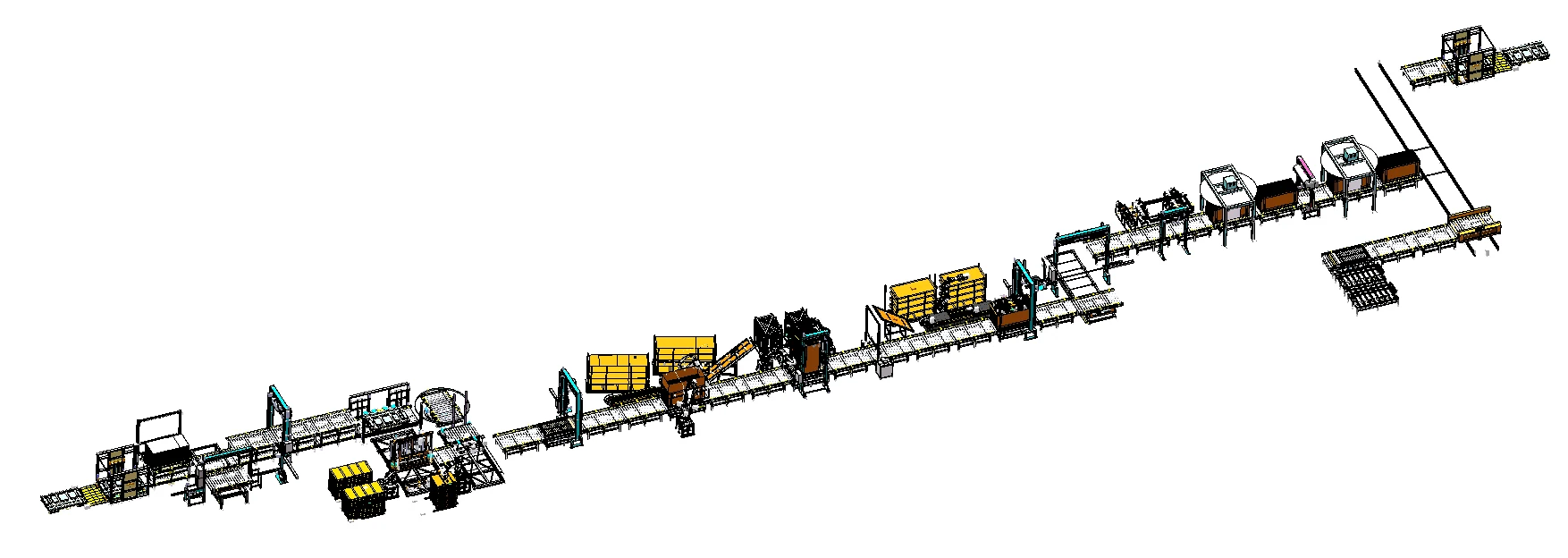
Article content
What you are actually buying from an automation supplier
An automation equipment purchase is rarely a catalog transaction. For photovoltaic process tools and end-of-line packaging machines, the deliverable is a configured system: mechanics, sensing, motion, controls, and interfaces matched to your product, process, and line. That makes supplier evaluation a scoping exercise as much as a sourcing one.
This guide gives a verification framework for two common equipment families: graphite-boat calibration and inspection equipment for photovoltaic cell production, and automatic case sealers for industrial packaging lines. The same logic applies to adjacent equipment such as graphite-boat clip replacement systems. The goal is to separate suppliers who can define and prove a configuration from those who can only quote a machine category.
Decision rule: do not compare suppliers until each has responded to the same written scope, with the same product samples, tolerances, throughput assumptions, and interface requirements. Otherwise you are comparing proposals, not capabilities.
Start with the process problem, not the machine name
Equipment categories hide very different jobs. A graphite-boat inspection system may need to check position, support a calibration workflow, record results, and exchange data with production systems. An automatic case sealer folds carton flaps and applies tape to close filled cases, with drive arrangement, carton range, tape format, and conveyor interfaces selected for the approved packaging process.
Write the problem statement in operational terms before contacting suppliers:
- Object being handled: graphite boat or clip configuration; filled case dimensions, weight, and flap style.
- What must be measured or done: position inspection, calibration support, result recording; flap folding and top/bottom tape sealing.
- Acceptance condition: what result counts as pass, and at what repeatability.
- Line context: upstream and downstream equipment, production-system interfaces, operator roles.
- Constraints: cycle time, floor space, utilities, cleanroom or packaging environment, changeover frequency.
If a supplier cannot restate this problem in their own words and map it to a proposed configuration, that is a warning sign. A machine name alone is not a specification.
A five-part supplier evaluation framework
1. Scope and configuration ownership
Ask who defines the configuration and who is accountable when the approved product or process changes. For graphite-boat equipment, the project configuration can combine vision measurement, motion control, result recording, and production-system interfaces. For case sealing, the drive arrangement, carton range, tape format, and conveyor interfaces are selected for the approved packaging process. In both cases, the supplier should be able to show how each element was chosen from your inputs, not from a standard template.
2. Evidence of similar configuration work
Request documentation that shows how the supplier approaches the problem: measurement principle, motion architecture, control sequence, inspection criteria, and data output. Generic brochures are weak evidence. A configuration description tied to your sample and tolerance is stronger. Treat any claim of prior projects as unverified until you see a reference you can contact or a documented test result.
3. Acceptance criteria and test method
Define pass/fail before purchase. For inspection and calibration equipment, agree on the measurement method, reference artifact, repeatability check, and how results are recorded. For a case sealer, agree on carton samples, tape specification, seal quality checks, jam recovery, and throughput measurement conditions. Acceptance criteria that cannot be measured on the floor are not acceptance criteria.
4. Integration and data interfaces
Production-system interfaces are a common source of delay. Specify the protocol, data fields, handshake logic, and what happens when the line or host system is unavailable. For packaging equipment, confirm conveyor height, transfer logic, and upstream/downstream signal behavior. Ask for an interface list in writing and test it before shipment where possible.
5. Documentation, training, and support model
Ask what documentation is delivered: drawings, bills of materials, control logic descriptions, operating procedures, and maintenance schedules. Clarify spare-parts identification, remote support options, and response process. Avoid relying on verbal assurances; put the support model in the contract.
Comparison table: what to verify by equipment type
| Verification area | Graphite-boat calibration and inspection equipment | Automatic case sealer |
|---|---|---|
| Product input | Approved boat and clip configuration; sample condition | Carton range, filled weight, flap style, tape format |
| Core function | Position inspection; calibration workflow support; result recording | Flap folding; top and bottom tape sealing |
| Key configuration choices | Vision measurement, motion control, data interfacing | Drive arrangement, carton range, tape format, conveyor interfaces |
| Acceptance evidence | Repeatability on reference samples; recorded results | Seal quality on approved cartons; jam recovery; throughput under stated conditions |
| Integration questions | Host system protocol; result data fields; exception handling | Conveyor height and transfer; line signals; upstream/downstream behavior |
The table is a starting checklist, not a specification. Each row must be completed with your own values and confirmed in writing.
Questions that expose weak proposals
Use the same question set with every candidate and compare answers side by side:
- Which inputs did you use to select this configuration, and which are still assumptions?
- What will you test before shipment, on which samples, and what result will you record?
- What happens to the configuration if our boat, clip, carton, or tape changes?
- Which interfaces are included, and who tests them against our production system?
- What documentation and training are included, and what is treated as an extra?
- What are the known limitations of this approach for our application?
A supplier who answers these with specifics is easier to manage than one who answers with reassurance. Vague answers are not necessarily disqualifying, but they should become open items in the contract.
Trade-offs to decide before you commit
Automation projects involve real trade-offs, and a good supplier will name them:
- Flexibility versus cycle time: wider carton or boat ranges often mean more changeover and adjustment.
- Inspection depth versus throughput: more measurement points improve confidence but consume cycle time.
- Custom integration versus standard interfaces: custom data links can fit your system better but increase validation effort and dependence on one supplier.
- Inline versus offline calibration: offline work can simplify equipment but adds handling and queue time.
Ask the supplier to state which trade-off their proposal makes and why it suits your stated priorities. If the proposal claims no trade-offs, the scope is probably underspecified.
Limitations of this framework
This guide does not provide equipment specifications, performance figures, prices, or lead times. Those must come from a supplier's written proposal and your own validation. It also cannot replace a site visit, sample testing, or legal and safety review. The framework is designed to make those steps more efficient, not to substitute for them.
Next step: issue a scoping package
Turn this framework into a short scoping package: process problem, product samples, acceptance criteria, interface list, documentation requirements, and the question set above. Send the same package to every candidate and require written responses. That single step will usually reveal which suppliers can define a configuration and which can only quote a category.
Project discussion
Discuss an automation requirement with our team
Share the workpiece, process sequence, layout, and interface requirements for a project-based technical review.