
A Technical Guide to Silicon Wafer Packaging Equipment in Cleanrooms
Article content
Table of Contents
1. The Core of the Automated Packing Process
1.1. How the Wafer Handling Robot Works
1.2. Reducing the Wafer Breakage Rate
2. Protecting Against Factory Hazards
2.1. Cleanroom Environment Standards
2.2. Static Electricity Control
3. The Final Seal and FOUP Integration
3.1. Why the FOUP Matters
3.2. Using the Vacuum Sealing Machine
4. Data Comparison: Manual vs. Automated Wafer Packaging
5. Industry FAQ
Silicon wafers are like thin glass. They are very expensive. You make them perfect in the hot oven. But you have to ship them safely. If they break in the box, you lose a lot of money. You can not sell broken silicon.
Silicon wafer packaging equipment stops this bad crash. It takes the naked wafers. It puts them in safe plastic boxes. We will look at the actual machines here. We look at the factory facts. We do not use big empty marketing words. You just need to know how the machine actually works. Bad packing ruins good chips.
1. The Core of the Automated Packing Process
You can not use human hands to pack wafers. Human hands shake. People drop things. You absolutely need an automated packing process. The machine does the same move exactly the same way every time. It never gets tired.
1.1. How the Wafer Handling Robot Works
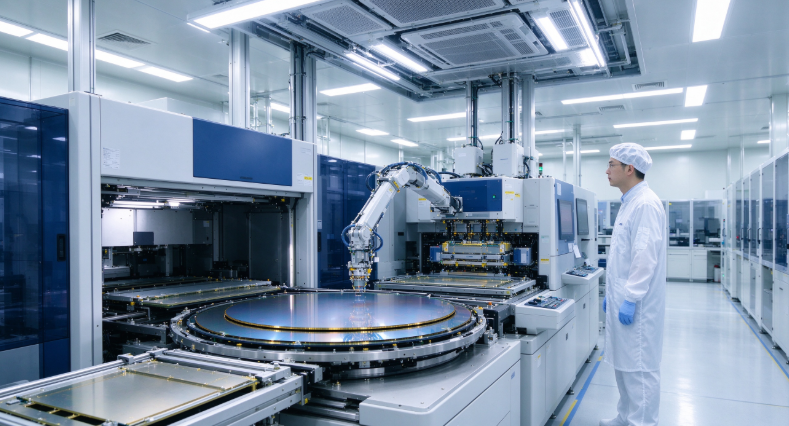
The wafer handling robot is the main worker inside the machine. It has a special metal arm. It does not grab the flat top of the wafer. The top has the microchips on it. If you touch the top, you destroy the chips.
So, the robot uses an edge grip. It only touches the very thin outside edge of the silicon circle. It moves very fast. It picks the wafer up from the inspection table. It slides the wafer into the plastic shipping box perfectly straight. It is a beautiful mechanical dance.
1.2. Reducing the Wafer Breakage Rate
When humans pack wafers, the wafer breakage rate is too high. Maybe one in five hundred wafers gets a tiny crack. A tiny crack grows into a big crack later. The automated equipment pushes this breakage rate down to almost zero.
The robot uses soft-landing software. It moves fast in the air. But right before it puts the wafer down, it slows down. It touches the plastic box very soft. Also, laser sensors watch the wafer. If the wafer is tilted, the robot stops. It does not push a tilted wafer. This stops the breaking.
2. Protecting Against Factory Hazards
Physical breaking is not the only danger. Invisible things in the air destroy silicon fast. The packaging equipment has to fight dirt and electricity.
2.1. Cleanroom Environment Standards
The machine sits inside a cleanroom environment. Usually, it is an ISO Class 3 or Class 4 room. But the inside of the packaging machine must be even cleaner.
The equipment has its own fan filter units on the roof. They push ultra-clean air down over the open boxes. This pushes all the floating dust away. If one piece of dust lands on the wafer before the box closes, that microchip is dead. The constant clean air stops the dust.
2.2. Static Electricity Control
Silicon holds static charge very easy. Plastic boxes also make static when they open and close. A small electric zap melts the microscopic copper lines on the wafer. You will not see it with your eyes. But the chip will fail testing.
You must have static electricity control. The packaging machine uses ionizers. These are metal bars that shoot positive and negative air. The air washes over the wafers and the plastic boxes. It kills the static charge completely before the lid goes on.
3. The Final Seal and FOUP Integration
After the wafers are in the box, you have to lock them up. You have to prepare them for the delivery truck. The truck vibrates a lot. The seal must be perfect.
3.1. Why the FOUP Matters
A FOUP is a Front Opening Unified Pod. It is a heavy, very clean plastic box. It holds 300mm wafers. The packaging equipment connects directly to the FOUP.
The machine opens the FOUP door automatically. It loads the wafers inside one by one. Then it puts the door back on and locks it tight. The FOUP keeps the wafers in a mini cleanroom. You can carry the FOUP down a dirty hallway, and the wafers stay safe inside.
3.2. Using the Vacuum Sealing Machine
Sometimes wafers travel across the ocean on a ship. The salt air causes rust. For long trips, factories use a vacuum sealing machine. They put the plastic wafer cassette inside a thick foil bag.
The vacuum sealing machine sucks all the normal air out of the bag. It replaces the air with dry nitrogen gas. Then it melts the edge of the bag with a hot wire. This locks the dry gas inside. Oxygen and water can not get in. The wafers will not rust during the long boat trip.
4. Data Comparison: Manual vs. Automated Wafer Packaging
We use numbers to show why factories buy these expensive machines. Factory engineers look at this data to calculate the money they will save. You balance the machine cost against the saved wafers.
This data comes from standard semiconductor manufacturing guidelines. It compares human workers to modern automated handling systems.
Production Feature | Manual Packing by Humans | Automated Packaging Equipment |
Wafer Breakage Rate | Approx. 0.15% | Less than 0.01% |
Particles Added per Wafer | 10 to 50 particles | Under 3 particles |
Average Throughput Speed | 100 - 150 wafers per hour | 300 - 450 wafers per hour |
Static Charge Risk | High (Friction from gloves) | Very Low (Active ionizers) |
FOUP Integration | Manual door handling | 100% Automatic loading |
Note: The real throughput speed changes based on how many inspection steps the robot does before packing.
5. Industry FAQ
Why does the robot use edge grip instead of a vacuum chuck?
A vacuum chuck sucks the flat face of the wafer. This is okay for blank silicon. But if the wafer already has microchips built on it, the vacuum pad will scratch them. Edge grip only touches the 1mm side edge. It leaves the important face totally safe.
Can one machine pack both 200mm and 300mm wafers?
Usually no. You can not just flip a switch. The FOUP boxes are totally different sizes. The robot hand is different. You have to stop the machine and change the heavy metal hardware to switch sizes. Most big factories just buy two different machines.
How does the vacuum sealer stop the sharp wafer edges from cutting the bag?
Wafers are sharp like knives. If you just suck the bag tight, the wafer cuts the foil. The vacuum sealing machine uses soft plastic coin spacers. Or the workers put the wafers in a hard plastic coin box first. Then they vacuum seal the whole hard box. The foil never touches the sharp edge.
What happens if the factory loses electrical power during packing?
The robot stops instantly. But good equipment has backup batteries for the robot brakes. The brakes lock the arm hard. The robot does not drop the expensive wafer. When power comes back, the robot remembers exactly where it is.
How often do I need to clean the packaging machine inside?
You should wipe the inside metal panels every week. You use special cleanroom wipes and alcohol. Even with good fan filters, some micro-dust builds up over time. If you do not wipe it, the dust eventually falls on your clean wafers.
Project discussion
Discuss an automation requirement with our team
Share the workpiece, process sequence, layout, and interface requirements for a project-based technical review.